Off-grid security cameras, solar-powered, for the Outer Banks.
Solar-and-battery cameras, cellular and satellite links, and recording that keeps going when the connection doesn't. For the Carova 4x4 beaches, docks and piers, Hatteras Island outbuildings, job sites, and anywhere else without an outlet in reach.
Locally owned · Corolla to Hatteras & northeastern North Carolina
What “no power, no internet” actually means
Wire-free covers three separate problems out here: powering the camera, getting the video off the site, and keeping a recording when neither is working. Here is how we solve each, and where each falls short. For a house or store that already has power and internet, our main security camera installation page covers standard wired systems.
Power: a solar panel plus a battery
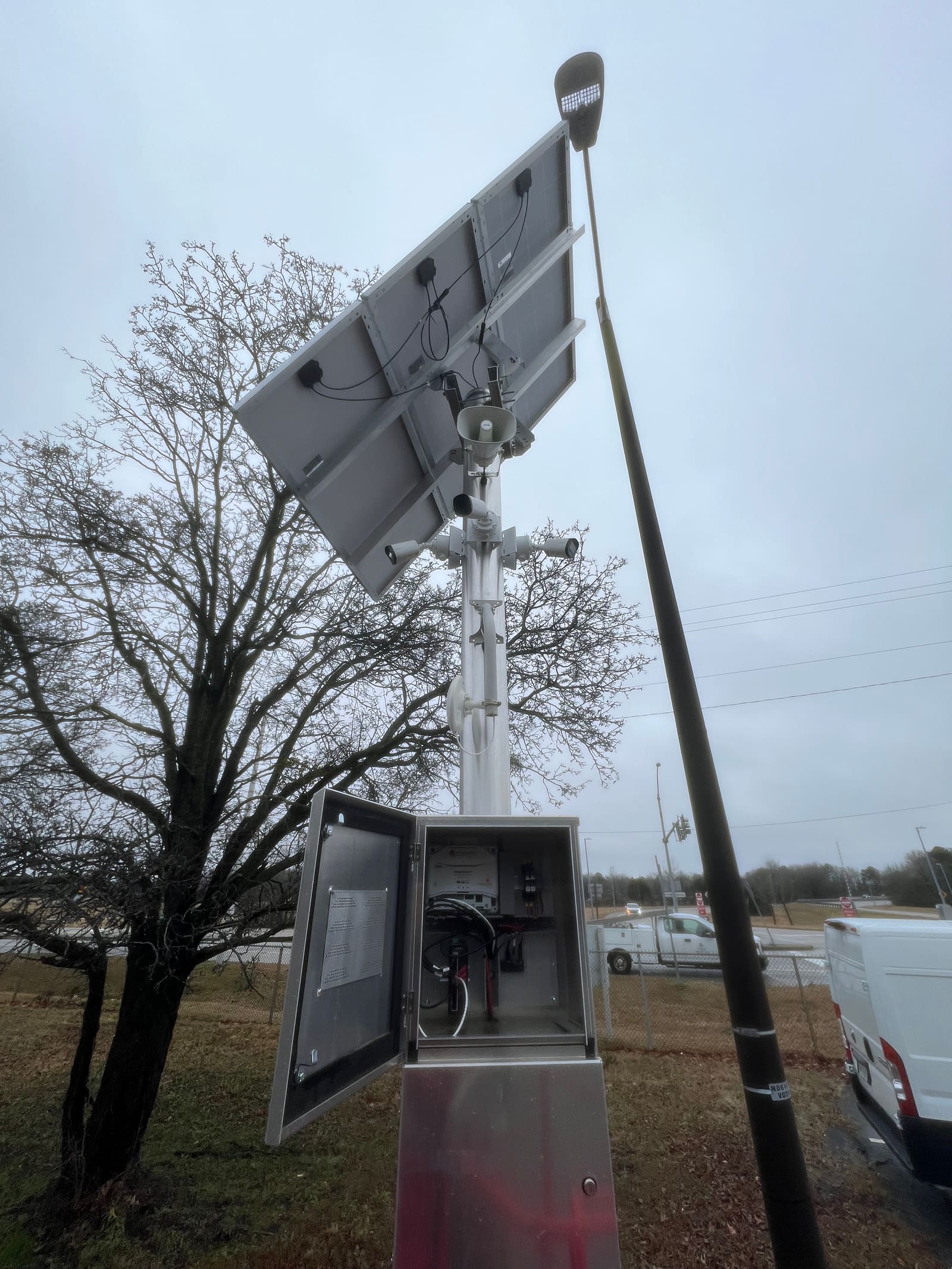
A solar camera is really a battery camera with a panel that tops it up. The battery carries the night and the grey days; the panel has to put back more than the camera used, averaged over a week. A unit that wakes on motion can live on a small panel. One streaming around the clock cannot, and the honest answer there is a bigger panel and battery in a sealed enclosure, not a marketing badge.
Motion-triggered cameras sip power; constant streaming needs a real panel and battery
Panels need direct sun; a dune, pier roof or live oak's shade cuts charge fast
Sealed enclosures keep salt and blown sand out of the battery and electrics
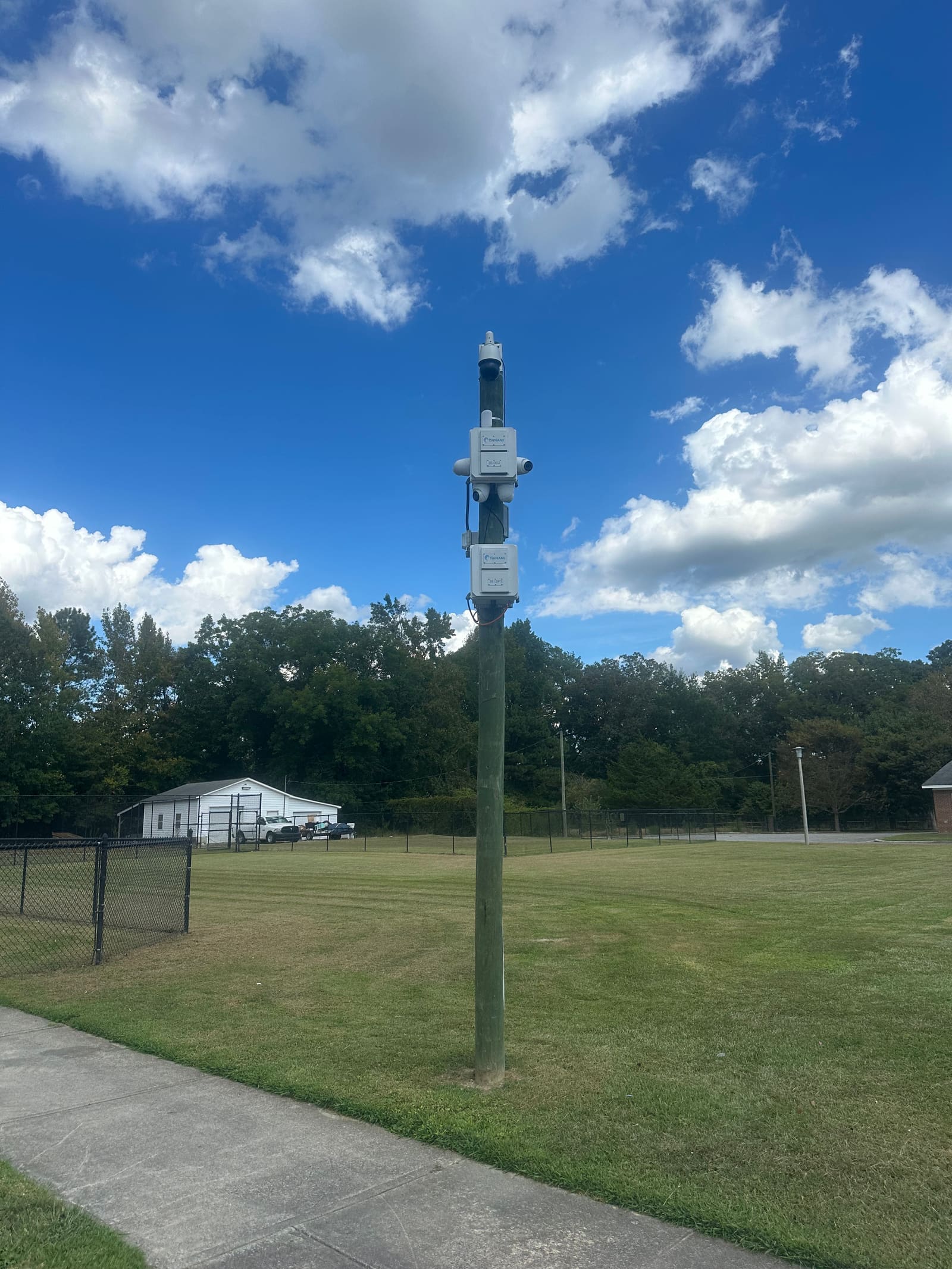
Getting video to your phone with no wired internet means a cellular camera with its own SIM card and data plan, or a satellite internet dish feeding a small network on site. Cellular is simpler; the trade-off is data. Every motion clip and every minute of live view goes through the plan, so these cameras upload clips rather than stream. Coverage is the other reality: signal up the 4x4 beach or on the sound side of Hatteras is not signal in Kill Devil Hills, so we check the carrier at your spot first.
Cellular cameras need an activated SIM and a data plan; there is no way around that
The FCC's National Broadband Map shows modeled outdoor coverage by address, a starting point only
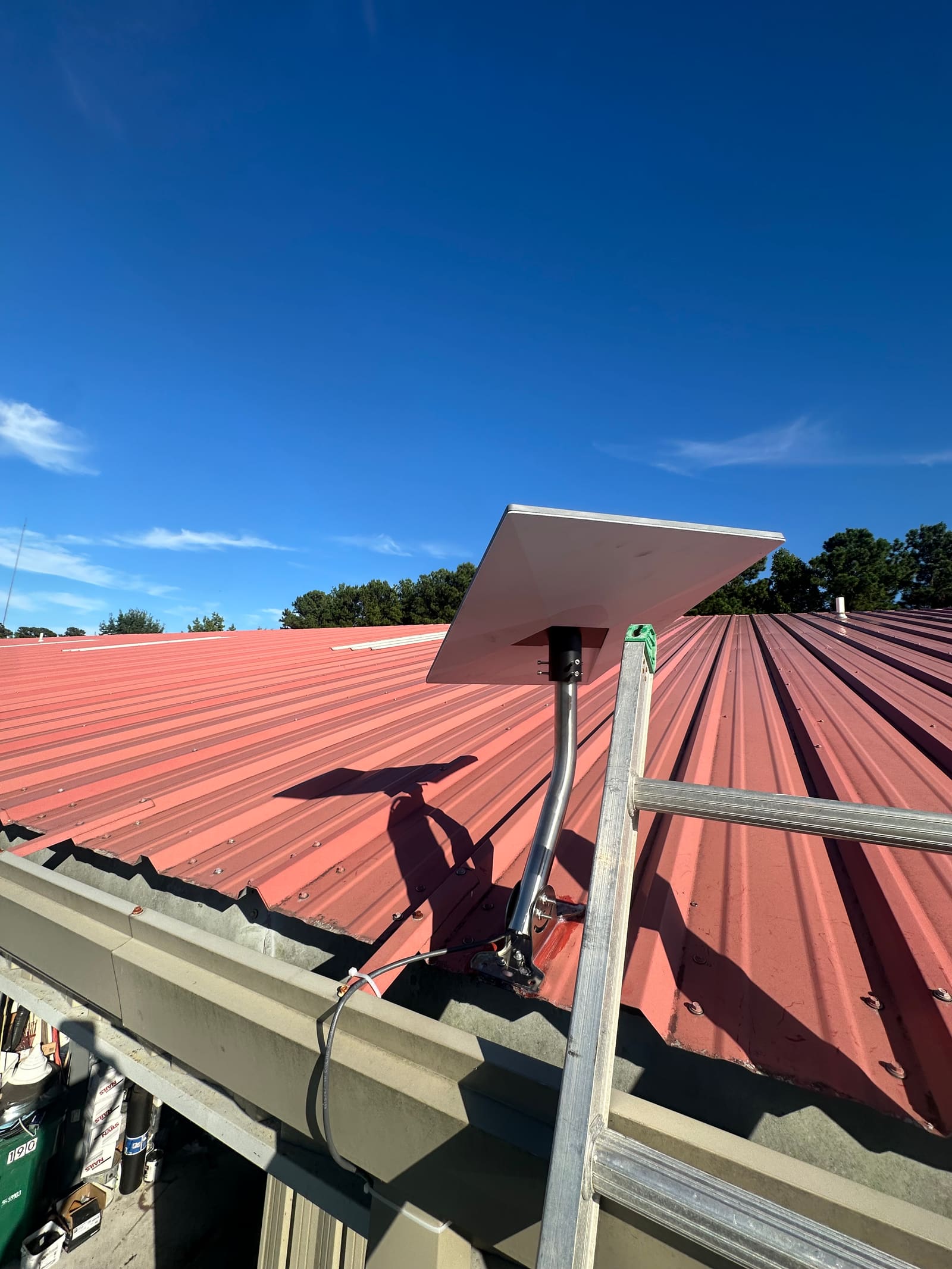
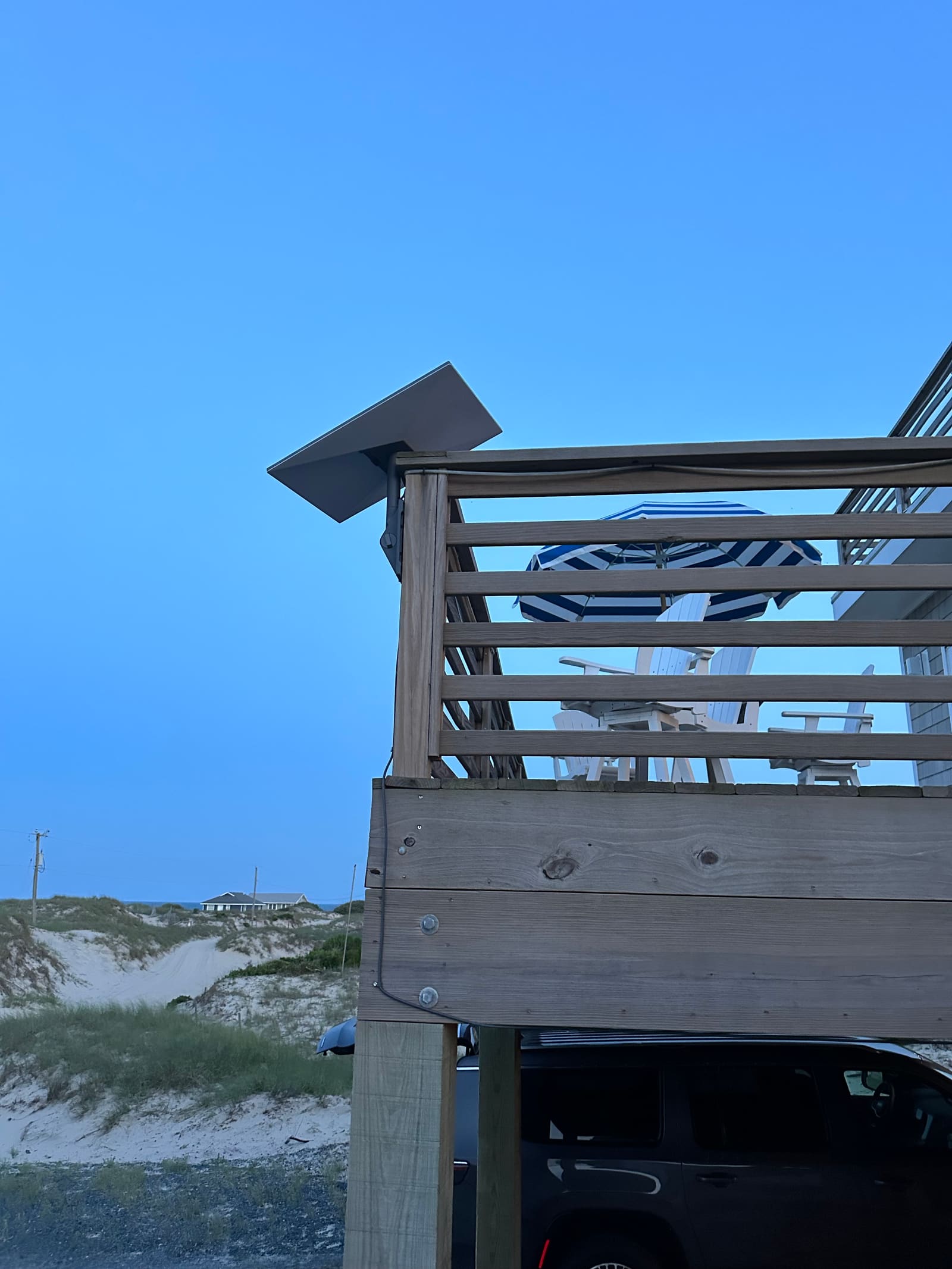
Satellite internet is the option when there is no usable cell signal at all
Recording: a local card or recorder, not cloud-only
Cloud-only cameras stop recording the moment the link drops, which is the moment you most want footage. Every off-grid system we build records locally first: to a memory card in the camera, or to a recorder in a weatherproof box when there are several cameras. The connection is for alerts and live view; if it drops in a storm, recording keeps going and syncs when it's back. Cards fill and overwrite, so we set retention with you.
Mounting for salt air and wind load
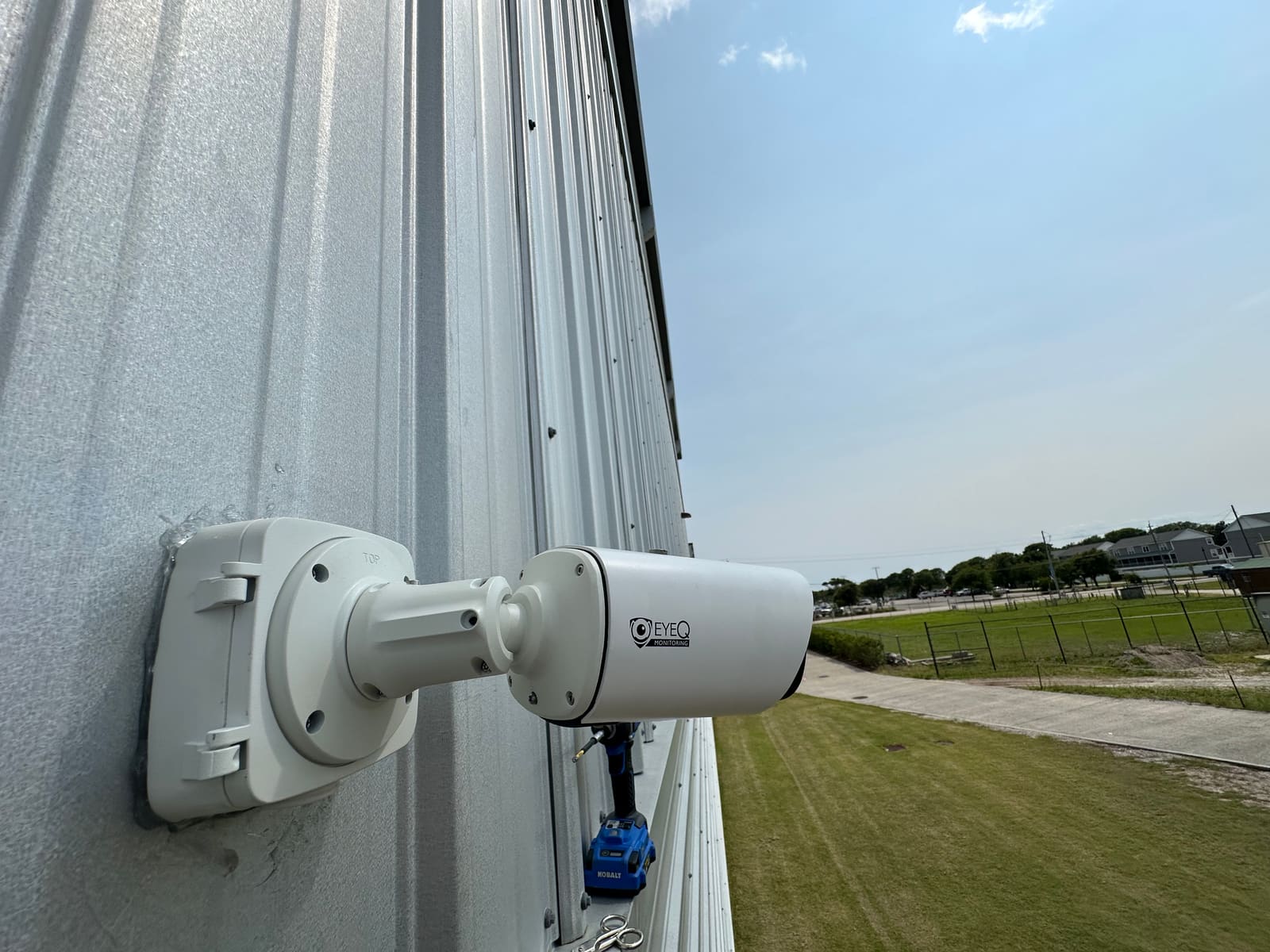
A solar rig is a sail. A panel, a camera and an enclosure on a pole catch far more wind than a dome under a soffit, and this coast sits in the state building code's high-wind zones. We size poles, brackets and footings for that, use stainless or coated hardware, and seal every penetration, because salt air eats bare steel and a loosened mount ruins the view long before it ruins the camera.
Where these cameras earn their keep
These are the no-outlet places we get called about.
Carova and the 4x4 beachesNorth of where N.C. 12 ends at the beach ramp, access is four-wheel drive only, and a lot can go weeks between visits.
Docks, piers and boat liftsSound-side docks often have no outlet at the end of the pier, and salt spray finds every open connector.
Hatteras Island outbuildingsSheds, garages and storage lots from Rodanthe to Hatteras Village, where the road overwashes and the power has been cut before.
Construction sitesA pole camera watches materials and equipment through the weeks before the meter is set.
Hurricane season, June through NovemberOnce you've evacuated, a camera that doesn't depend on the house's power or internet is how you see what happened.
What fails in winter, and how we plan for it
Short days
Kill Devil Hills gets under ten hours of daylight on December 21 and more than fourteen and a half in late June. A panel that keeps up in August falls behind in January.
Low sun angle
Winter sun sits low in the south. A panel shaded by a roofline it clears in June gets only a couple of hours of real charge.
Cold batteries
Batteries deliver less in the cold, and many camera makers' published operating floors sit around 14°F (some go lower). We spec more battery than the brochure says.
Grey stretches
A week of nor'easter cloud is normal. We size for days of autonomy, not the sunny-day number, and have the camera shed work when the battery runs low.
Questions we get asked about off-grid cameras
Straight answers about solar, cellular and no-internet cameras. Don't see yours? Call and ask a person.
Do solar security cameras work with no internet at all?
Yes, if they record locally. A solar camera with a memory card or a local recorder keeps recording with no connection. What you give up is remote viewing and alerts; to get those on an off-grid site, the camera needs a cellular data plan or a satellite internet link.
Do 4G/LTE cameras need a monthly data plan?
Yes. A cellular camera has a SIM card and moves video over mobile data, so a carrier plan is part of owning one. We set it to upload motion clips instead of streaming, which keeps a small plan enough. There is no subscription to us; the plan is between you and the carrier.
Will a solar camera keep up through the winter on the Outer Banks?
A properly sized one will. Late December gives Kill Devil Hills under ten hours of daylight and a low sun, so we size the panel and battery for January, keep the panel out of shade, and wake the camera on motion. Undersized box-store kits die in February.
Can you put a camera on the 4x4 beach in Carova?
Yes. The off-road beach north of Corolla is four-wheel drive only, so we build it to run without a return trip: solar power, local recording, and a cellular link if there is usable signal at your lot. If not, satellite internet is the fallback.
Can a camera on my dock or pier survive salt spray?
Salt is the enemy of every exposed connector. We use coastal-rated cameras and enclosures, stainless hardware and sealed penetrations, and mount high enough to stay above spray where the structure allows. Nothing on a pier is maintenance-free, so we tell you what to check each season.
What happens to the camera in a hurricane?
Mounted right, it stays put; the state building code's high-wind zones are what we build the pole and hardware to. If power and internet drop, a solar camera with local recording keeps recording, and a cellular link can come back before wired internet does. We can't promise any camera survives a direct hit, and we won't pretend otherwise.
Ready when you are.
Tell us where the site is. We'll check sun and signal at the spot and give you a straight answer on what it takes.